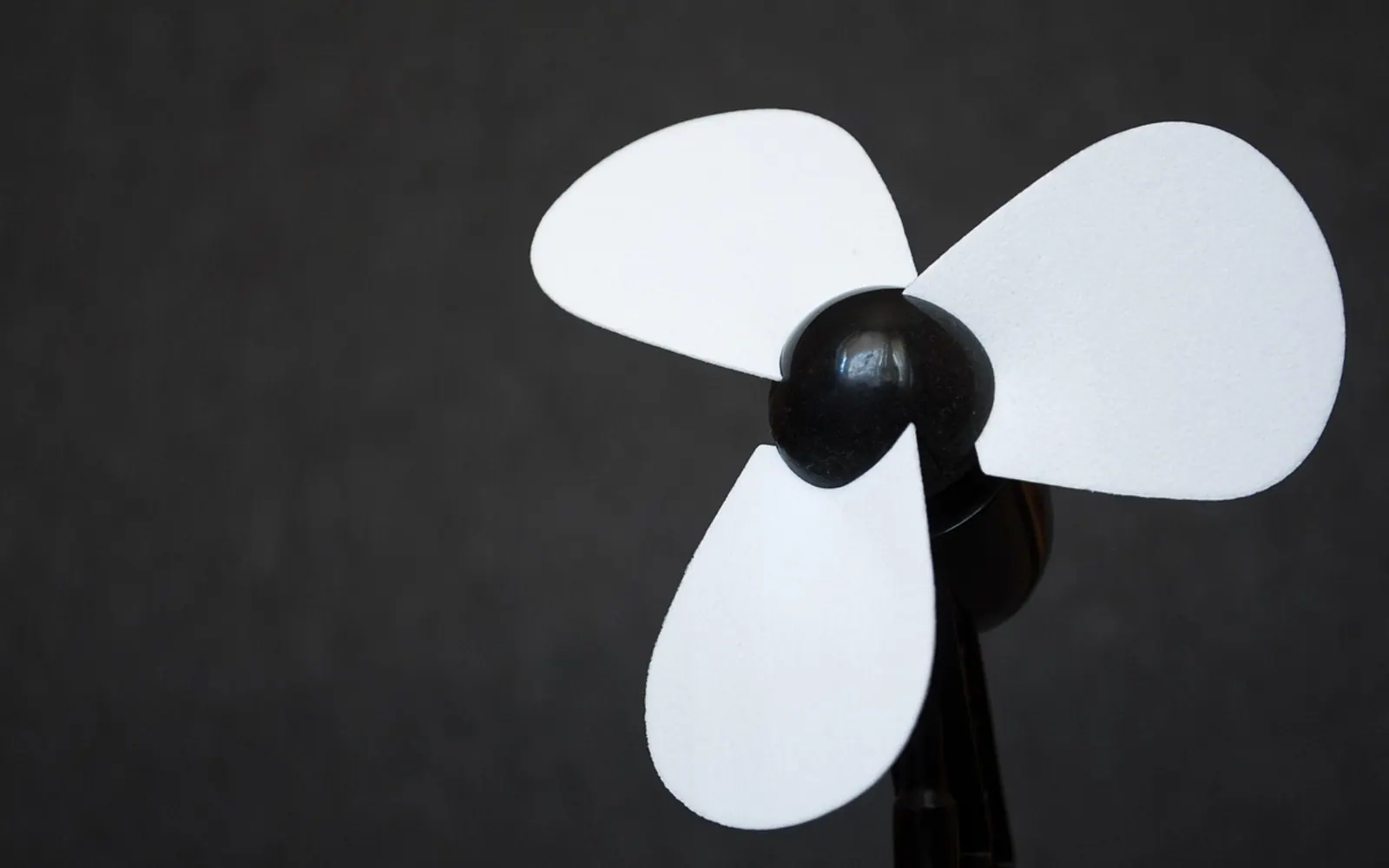
A homemade swamp cooler is a small fan that pushes air across ice or water-soaked material, so the air comes out a little cooler than it went in. The simplest version uses a lidded bucket, a foam liner, a fan on the lid and frozen water bottles inside. It will not replace air conditioning, but placed close to where you sit, it can make a hot afternoon on the patio or in a small room more comfortable.
How evaporative cooling works
When water evaporates, it draws heat from the air around it. A true swamp cooler, also called an evaporative cooler, pulls warm air through a wet pad so that some of the water evaporates and the air leaving the pad is cooler. This works best in dry heat. In very humid weather, the air already holds a lot of moisture, evaporation slows down and the cooling effect becomes much weaker.
The ice-bucket version works slightly differently: the air cools as it passes over something cold. It is often called a swamp cooler at home, and it gives a pleasant, direct breeze in either dry or humid conditions, as long as there is ice in the bucket.
Two designs compared
| Ice-bucket cooler | Wet-pad cooler | |
|---|---|---|
| How it cools | Air passes over ice or frozen bottles | Air passes through a damp pad and evaporates water |
| Works best | Short sessions, any climate | Dry, hot weather |
| Upkeep | Refreeze or replace ice regularly | Keep the pad wet and clean |
| Main downside | Ice melts, so cooling fades | Adds humidity to the room |
Materials for the ice-bucket version
- A large plastic bucket with a lid, or a hard-sided cool box
- A foam liner that fits inside the bucket, for insulation (optional but helpful)
- A small fan whose face fits on the lid, ideally battery or USB powered
- Two or three short lengths of plastic pipe or elbows for vents
- Frozen water bottles or ice packs
- A craft knife or hole saw, a marker and some tape
Step by step: the ice-bucket cooler
- Mark the fan hole. Place the fan face-down on the lid, trace around the blades and cut the circle out, slightly smaller than the fan housing so it sits on top.
- Cut the vents. Mark two or three holes in the side of the bucket, well above where meltwater will collect. Cut them to fit the pipe pieces snugly.
- Fit the liner. Slide the foam insert into the bucket and cut matching vent holes through it.
- Insert the pipes. Push the pipe pieces through the vents so the cool air has a clear path out.
- Load the cold. Add frozen bottles or ice packs. Sealed bottles avoid a slushy mess and can go back in the freezer.
- Mount the fan. Set it on the lid blowing downward into the bucket, secure it with tape and switch it on. Cool air should flow out of the vents.
Step by step: a simple wet-pad cooler
- Stand a small fan on a stable, waterproof surface.
- Fix a frame, such as a wire rack or a cooling rack, a short distance in front of it.
- Drape a damp cotton towel or a purpose-made cooling pad over the frame so the fan blows through it.
- Set a shallow tray underneath to catch drips, and re-wet the pad whenever it starts to dry.
Getting the most from it
- Point the airflow directly at the people you want to cool rather than at the whole room.
- Use it in the shade; sun on the bucket melts ice quickly.
- Keep a second set of frozen bottles ready to swap in.
- For the wet-pad version, open a window or door slightly so humid air can escape.
- Close curtains on sunny windows to keep the room from heating up in the first place.
Safety points
- Keep mains plugs, cables and sockets well away from water. Battery or USB fans remove most of that risk.
- Place the cooler where it cannot be knocked over by children, pets or a ball game.
- Empty, rinse and dry the bucket or pad after use to prevent mould and smells.
- Do not leave a mains fan running unattended.
- A homemade cooler is a comfort aid, not protection during a heatwave. Follow local heat-health advice, drink water regularly and seek a properly cooled place if needed. Anyone feeling dizzy, confused or unwell in the heat should get medical help.
Quick questions
Does a homemade swamp cooler really work?
It produces a noticeably cooler breeze close by, but it cannot cool a whole room or house. Think of it as a personal cooler.
How long does the ice last?
That depends on the heat, the insulation and the amount of ice. A foam liner and shade help it last longer.
Making the most of a warm day
A cool breeze is welcome at any outdoor gathering. Keep the drinks chilled using the cool-box tips in how to plan a picnic, set up some shade with our outdoor living ideas, and save the energetic backyard games for the cooler hours of the evening.