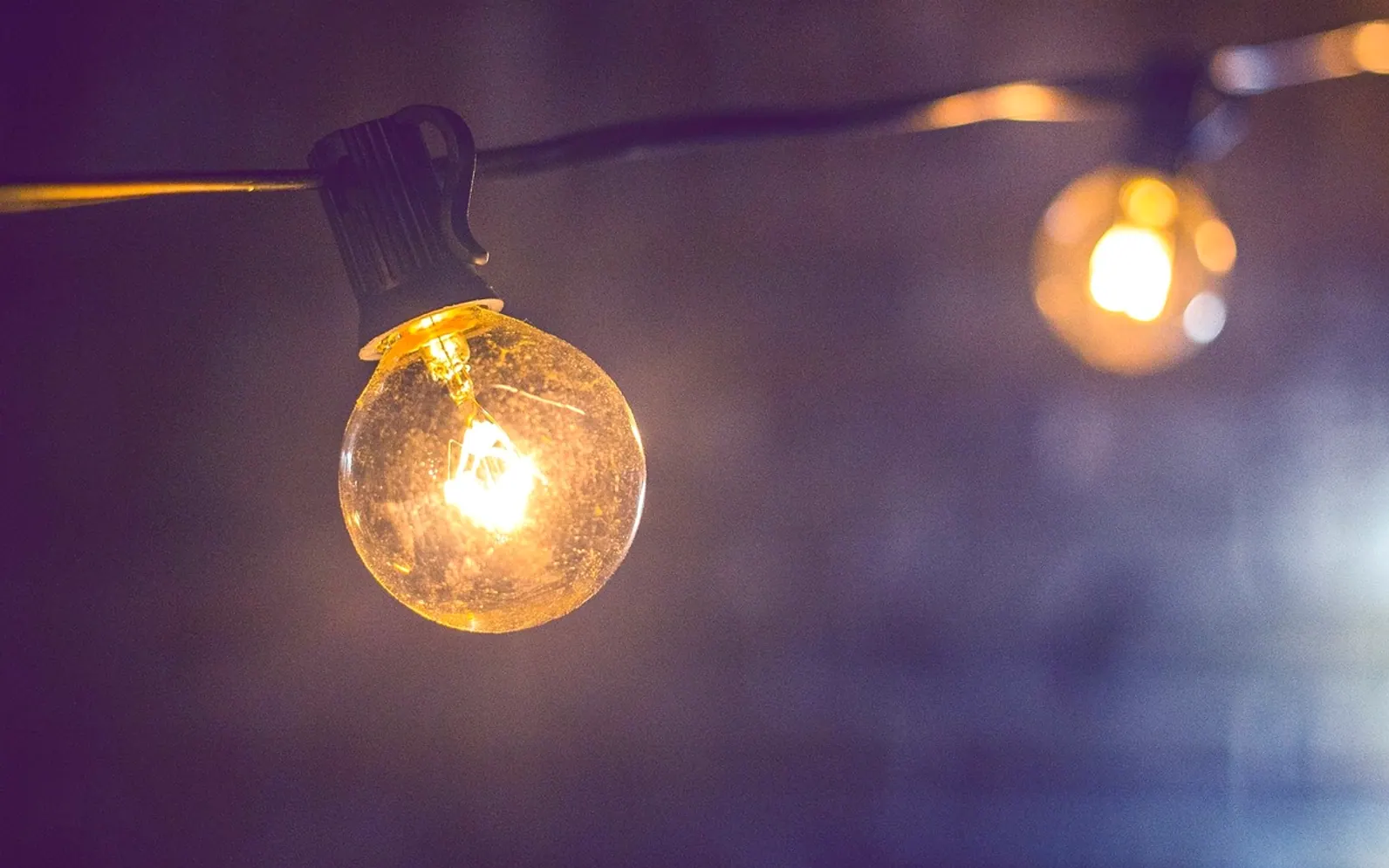
To hang outdoor string lights, choose a layout, measure the distances, find a weatherproof power source, fix sturdy anchor points at each end and at every turn, and for longer spans run a tensioned guide wire that carries the weight while the lights clip onto it. Use lights and extension leads rated for outdoor use, plug them into a protected outdoor socket, and the lights will hang neatly through many summer evenings.
Choose a layout first
The pattern decides how many anchor points you need and how much cable to buy, so settle it before anything goes up.
| Layout | Best for | Anchor points |
|---|---|---|
| Single swag | A narrow patio or a path | Two |
| Perimeter | Framing a deck or a fence line | One at each corner |
| Zigzag | Covering a dining or seating area | Several along two opposite sides |
| Canopy from a centre point | A round table or a lawn party | A tall central pole plus points around the edge |
| Tree wrap | A single feature tree | None; the trunk and branches carry the lights |
Sketch the space from above, mark where the plug is and draw the route. Measure each run with a tape measure and add some extra for the natural dip between anchor points.
Before you buy
- Outdoor rating. Check the packaging confirms the set is designed for outdoor use.
- Bulb type. LED bulbs run cooler and use less power; shatterproof plastic bulbs survive knocks and wind better than glass.
- Connecting sets. Many strings link end to end, but each product lists a maximum number of connected sets. Stay within it.
- Power. Mains sets need an outdoor socket. Solar or battery strings avoid cables entirely but are usually dimmer.
- Colour. Warm white suits dining and relaxing; cooler white feels brighter but harsher.
Tools and materials
- Screw-in cup hooks or eye screws for fascia boards, fences and posts
- Galvanised steel guide wire with a turnbuckle at one end, for spans longer than a few metres
- Wire rope clips, carabiners or zip ties
- Tree straps or soft ties instead of nails for trees
- A stable ladder and a second person to hold it
- An outdoor-rated extension lead and a weatherproof timer, if needed
Step by step
- Test the lights on the ground before climbing anything. Swapping a dead bulb is far easier at waist height.
- Fit the anchor points. Screw hooks into solid timber such as fascia, posts or fence rails, not into thin cladding or gutters.
- Run the guide wire on longer spans. Loop it through the first anchor, secure it with wire clips, stretch it to the far anchor and tighten it with the turnbuckle until the sag is gentle.
- Attach the lights to the wire every so often with clips or zip ties, letting the wire take the weight rather than the electrical cable.
- Route the plug end down a post or wall to the socket, keeping it off walkways and away from puddles.
- Tidy and check. Trim zip ties, step back, look at the line from your seating area and adjust any uneven sags.
Hanging lights with no wall nearby
In the middle of a lawn, sturdy freestanding posts do the work. Fill large planters or buckets with heavy material, set a tall timber or metal pole in each, and run the lights between them. Add climbing plants or flowers to the planters so the poles look intentional rather than temporary.
Using trees
Wrap a soft strap around the trunk or a strong branch and hang the lights from that. Nails and screws damage bark and can harm the tree over time.
Staying safe
- Plug outdoor lights into a socket protected by a residual-current device, also known as a ground-fault circuit interrupter, which cuts the power if something goes wrong.
- Never staple or nail through the electrical cable.
- Keep plug connections off the ground and sheltered from rain.
- Switch off and unplug before adjusting anything.
- Have a second person steady the ladder, and avoid working near overhead power lines.
- Ask a qualified electrician to install any new outdoor socket or permanent wiring.
Common mistakes
- Pulling the string itself tight, which strains the cable and the sockets.
- Skipping the measurements and ending up a few metres short of the plug.
- Hanging lights too low over a path or a table where heads will brush them.
- Leaving indoor extension leads outside overnight.
Quick questions
How do you hang string lights without nails?
Use freestanding poles in weighted planters, tree straps, clamp-on hooks for railings, or adhesive outdoor hooks for very light strings on smooth surfaces.
Can outdoor string lights stay up all year?
Some sets are built for permanent installation and others are not. Follow the manufacturer's guidance, and bring lightweight sets indoors over winter if in doubt.
Making the most of the glow
Lights are the finishing touch on a bigger picture. Pair them with the table styling in garden party decorations, plan the rest of the space with our outdoor living ideas, and keep the evening going with a round of backyard games for adults once the bulbs come on.