The best field day games need almost no equipment, take a minute to explain and give every player a reason to cheer: sack races, egg-and-spoon relays, tug of war, water balloon tosses and team obstacle courses. Run them as stations that small teams rotate through, and a school-style field day works just as well in a park with a few families as it does at a summer party for grown-ups.
Plan the shape of the day first
Before picking games, settle three practical questions.
- Teams. Mix ages and abilities in every team so the results stay close. Give each one a colour, a name and, if possible, an adult captain.
- Format. Stations suit larger groups: each game runs in its own corner, teams move on at the sound of a whistle, and nobody queues for long. A small group can simply play one game after another together.
- Length. Keep rounds short, with water and shade in between, and save one final event that the whole crowd plays at once.
Classic races
Sack race
Players step into a hessian sack, a pillowcase or an old duvet cover, hold the top at waist height and hop for the line. Pick soft grass, because tumbles are part of the entertainment.
Three-legged race
Pairs tie their inside ankles together with a scarf or soft strap and run as one. A shared "inside, outside" count before the start helps; pairs that keep talking tend to stay upright.
Egg-and-spoon race
Balance an egg on a spoon at arm's length and get it to the finish. Hard-boiled eggs, plastic eggs or small potatoes spare the clean-up. A dropped egg means stopping, replacing it and carrying on.
Wheelbarrow race
One partner walks on their hands while the other holds their ankles, then they swap for the way back. Keep the course short and save this race for older children and adults.
Team challenges
Tug of war
Use a thick, soft rope and mark a centre line with a cone or ribbon. Match the teams roughly by size, and remind everyone to hold the rope in their hands only, never looped around a wrist or waist.
Water balloon toss
Partners stand a step apart and lob a balloon back and forth, moving one step further away after every catch. The last pair holding an unbroken balloon wins. Gather every scrap of rubber afterwards.
Sponge relay
Each team gets a bucket of water at the start and an empty tub at the finish. Runners soak a big sponge, dash across, squeeze it out and race back. When time is called, the fullest tub takes the round.
Obstacle course
Hoops to step through, cones to weave around, a bench to crawl beneath and a rope to jump. Time each team, or send runners in pairs who tag the next pair at the end.
Hula hoop pass
The team forms a circle holding hands, and a hoop has to travel all the way round without anyone letting go. It looks easy for about ten seconds.
Equipment checklist
| Item | Used for |
|---|---|
| Cones or markers | Start and finish lines, courses, station edges |
| Sacks or pillowcases | Sack race |
| Soft ties or scarves | Three-legged race |
| Spoons and eggs (boiled, plastic or potatoes) | Egg-and-spoon race |
| Thick rope | Tug of war |
| Balloons, buckets and sponges | Water games |
| Hoops | Hoop pass and obstacle course |
| Whistle or kitchen timer | Station changes |
| Ribbons, stickers or paper certificates | The closing ceremony |
Keeping everyone safe and included
- Walk the ground before marking out races and look for holes, stones and sprinkler heads.
- Put drinking water, sun cream and a shady resting spot within reach of every station.
- Offer a role to anyone who would rather not race: timekeeper, scorer, referee or chief cheerleader.
- Pair wheelbarrow and three-legged racers by similar height.
- Keep an adult beside the water games and near any slope, pond or path.
Points and prizes
Field day works best when everyone leaves with something. Award points for finishing, team spirit and fair play as well as for winning, and hand out ribbons with titles like "best teamwork" or "most determined hopper". Children quickly notice when prizes only go to the fastest runners.
Field day games for adults
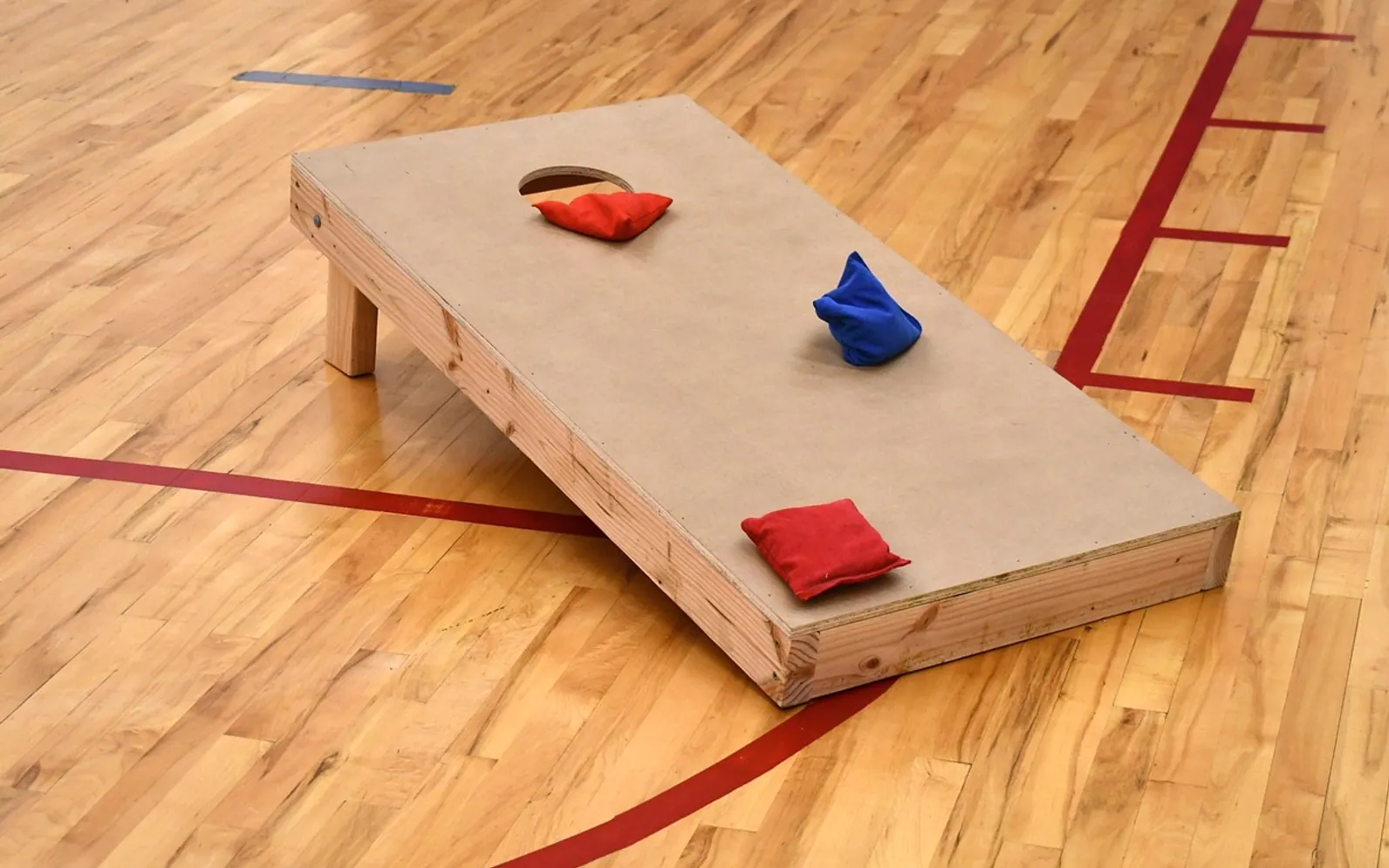
Grown-ups enjoy these races more than they expect, especially with a twist: a slow-motion sack race, an egg-and-spoon relay with raw eggs or a three-legged dash in party clothes. Mix them with the calmer lawn favourites in our list of backyard games for adults, and add a bag-toss station using the rules in how to play cornhole.
Questions organisers ask
How many games does a field day need?
Enough for each team to visit every station once, with short breaks between them. Five to eight games usually fill a morning or an afternoon without anyone flagging.
What if it rains?
Bring the quieter games indoors and swap the races for a scavenger hunt around the house, which keeps the team spirit alive without a muddy lawn.